Choosing a web design company for your law firm is about more than finding someone who can create an exciting website. Your website is often one of the first places prospective clients interact with your firm, so it needs to communicate credibility, make important information easy to find, support your visibility in search, and give visitors a clear path to contact you.
The right law firm web design company should understand both website development and the specific needs of legal practices. Before selecting a partner, consider their legal-industry experience, approach to custom design, SEO knowledge, conversion strategy, portfolio, accessibility practices, ongoing support, and how much ownership and control you will have over your website.
Here are some of the most important factors to evaluate.
1. Experience Designing Websites for Law Firms
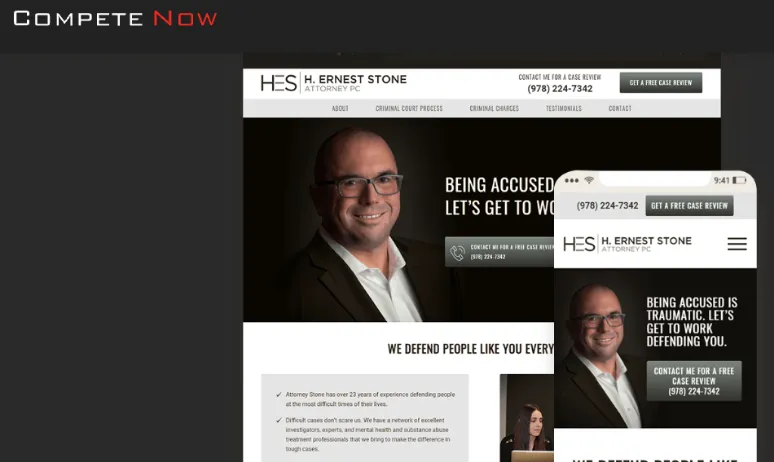
Legal websites have different goals and considerations than websites in many other industries. Potential clients may arrive at your website during a stressful or time-sensitive situation and need to quickly determine whether your firm handles their legal issue, serves their location, and/or has the experience they are looking for.
A web design company with experience working with law firms should understand how to organize information such as:
- Practice areas
- Attorney profiles
- Case results
- Client testimonials
- FAQs and educational resources
- Office locations and service areas
- Consultation and contact information
Compete Now, understands the importance of making sure a website prioritizes both the needs of your website and the design. It’s important that you pay attention to more than aesthetics. In addition, make sure to consider how easily you can navigate the website, understand the firm’s services, learn about its attorneys, and take the next step.
Having worked with law firms across different practice areas, Compete Now has seen how these priorities can vary significantly from firm to firm. Our law firm website design services are built around creating a website that reflects the individual practice rather than forcing every law firm into the same structure.
2. Custom Web Design Instead of a One-Size-Fits-All Approach
Your website should reflect your firm’s brand and what differentiates you from competing practices.
Ask whether the company creates custom designs or primarily places clients into pre-built templates. Templates can be appropriate in certain situations, but they can also limit how effectively a website communicates a firm’s individual identity and priorities.
A more customized approach allows the website team to consider your audience, practice areas, branding, content, functionality, and goals when determining how the site should look and function.
This is also worth evaluating when reviewing a company’s portfolio. If every law firm website looks almost identical, that may tell you something about how customized the finished product will actually be.
Compete Now’s approach to custom web design focuses on creating websites around each organization’s brand, goals, and audience while making them straightforward to maintain and update over time.
3. SEO Knowledge Built Into the Website Process
Search engine optimization should not be something you first consider after your new website launches.
Website structure, navigation, mobile usability, content organization, URLs, headings, internal linking, and other decisions can all influence your site’s SEO foundation.
When evaluating a law firm web design company, ask how SEO fits into its overall approach.
For law firms, search strategy may eventually include practice-area pages, location-specific content, attorney pages, FAQs, educational resources, and other content that helps search engines and prospective clients understand your firm’s expertise.
Search is also evolving beyond traditional Google results. AI-powered search experiences are changing how people research questions and discover businesses, making a clear, authoritative digital presence increasingly important.
You do not need an agency to give away its entire SEO strategy before you hire them. However, you should be confident that the people building your website understand how web design and search engine optimization work together.
4. A Strategy for Turning Website Visitors Into Leads
Getting someone to your website is only part of the job. Once visitors arrive, your website should make it easy for them to determine whether your firm can help and what they should do next.
Look for a web design partner that thinks about the visitor experience throughout the project.
Depending on your firm’s needs, that may include prominent contact information, consultation forms, clear calls to action, streamlined navigation, testimonials, case results, attorney credentials, or other trust-building information.
The goal is not necessarily to place a “Contact Us” button everywhere. A well-designed legal website should create natural paths between researching a legal issue, evaluating the firm’s experience, and reaching out when the visitor is ready.
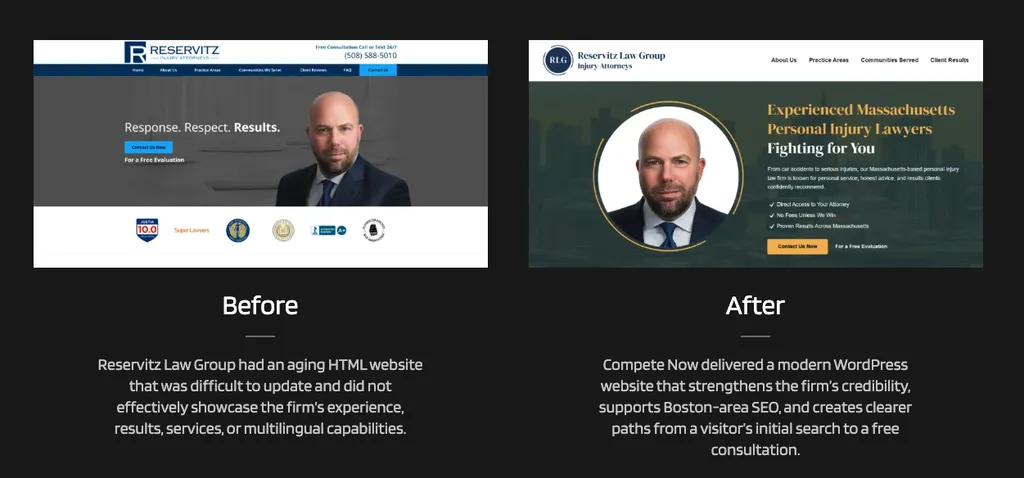
For example, Compete Now’s Reservitz Law Group website redesign incorporated practice-area information, attorney profiles, testimonials, case results, multilingual functionality, and several ways for prospective clients to contact the firm. The project shows how these individual pieces can work together without relying on a single conversion feature.
5. A Strong Portfolio of Relevant Work
A portfolio gives you an opportunity to evaluate what a company can actually deliver.
As you review law firm website examples, consider whether every website looks essentially the same or whether the designs reflect the individual firms. Look at the quality of attorney pages, navigation, mobile experience, calls to action, branding, photography, and practice-area content.
It can also be helpful to look for projects involving challenges similar to yours. Perhaps you need to modernize an outdated site, reorganize a large amount of legal content, better communicate several practice areas, or build a stronger foundation for future digital marketing.
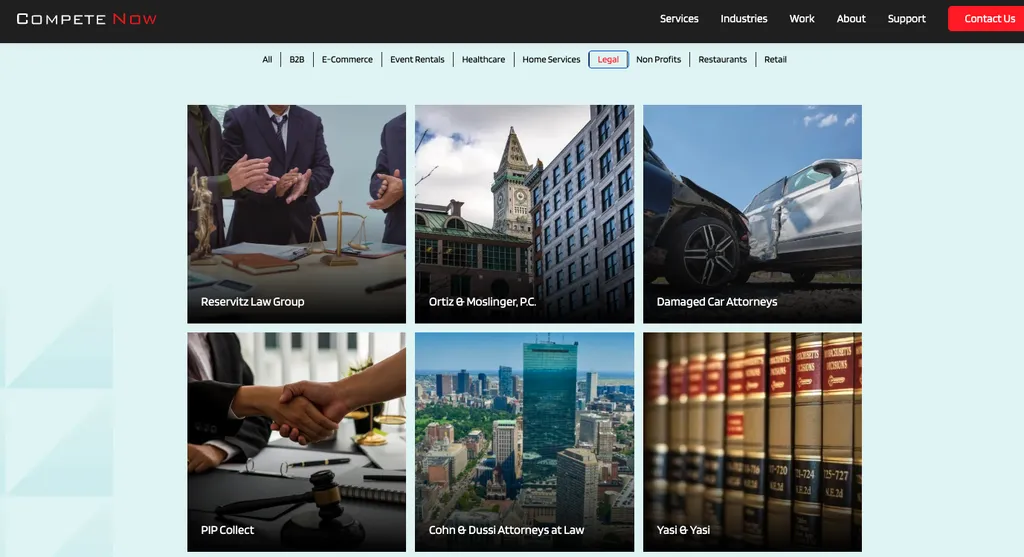
Compete Now’s web design portfolio includes legal projects alongside work across other professional industries, providing examples of how the team adapts website design to different organizations and audiences.
6. Website Accessibility and Usability
Accessibility should be part of the website design and development conversation from the beginning.
Ask prospective partners how they approach accessible web design. Considerations can include keyboard navigation, color contrast, alternative text, readable typography, properly structured content, accessible forms, and compatibility with assistive technologies.
Accessibility can create a better experience for visitors with disabilities while improving usability more broadly.
It is also worth asking whether accessibility is considered throughout the website project or addressed only near launch. A strong web partner should be thinking about the overall user experience throughout design and development.
7. Ongoing Website Support
Launching a website is not the end of the project.
Websites require ongoing attention as technology changes and your law firm evolves. You may need to add attorneys, update practice areas, publish new content, create landing pages, address technical issues, or make design and functionality improvements.
Before hiring a company, ask what happens after launch.
Will you have someone to contact when you need assistance? Are hosting and maintenance available? Who handles software updates, security monitoring, troubleshooting, and future improvements?
For firms that want a longer-term relationship with their website partner, Compete Now offers website support and optimization in addition to web design and digital marketing services.
8. Ownership and Control of Your Website
This is one of the easiest factors to overlook when comparing web design companies.
Before signing an agreement, understand what you will control when the project is finished. Ask questions about your website platform, hosting, domain name, content, design assets, administrative access, and what happens if you eventually decide to work with another provider.
You should also understand how easily your internal team can make routine website changes.
A good website should support your firm’s growth rather than leave you unnecessarily dependent on a vendor for every small change.
Questions to Ask a Law Firm Web Design Company
Before choosing a partner, consider asking:
- How much experience do you have designing websites for law firms?
- Can I see examples of your legal website work?
- Will our website be custom-designed?
- How is SEO considered during the project?
- How will the website help prospective clients find the information they need?
- How do you approach mobile responsiveness and accessibility?
- What support is available after launch?
- Will our team be able to update the website ourselves?
- What website assets and accounts will our firm control?
- Can you continue helping with SEO or digital marketing after the website launches?
The answers can help you compare companies based on more than price or visual design alone.
Finding the Right Web Design Partner for Your Law Firm
The best web design company for your law firm should understand that your website is more than an online brochure. It plays an important role in how prospective clients discover your practice, evaluate your experience, learn about their legal options, and decide whether to contact you.
Strong design matters, but it is only one part of the equation. Legal-industry experience, SEO knowledge, user experience, accessibility, ongoing support, and the ability to understand your firm’s individual goals should all factor into your decision.
At Compete Now, we’ve had the opportunity to work with law firms on website design, development, SEO, and ongoing digital marketing. That experience helps us understand the questions law firms should be asking when evaluating their websites while recognizing that no two firms need exactly the same solution.
If you’re considering a redesign, start by taking a closer look at our law firm website design work and see how we’ve approached websites for different legal practices.
FAQs about Law Firm Web Design:
What Should I Look for When Choosing a Web Design Company for My Law Firm?
When choosing a web design company for your law firm, look for relevant legal-industry experience, a custom approach to design, SEO knowledge, an understanding of user experience and conversion strategy, accessibility considerations, a strong portfolio, ongoing support options, and clear policies around website ownership and control. Most importantly, look for a company that takes the time to understand your firm’s goals rather than applying the same website strategy to every law practice.
Should a law firm web design company also understand SEO?
Yes. SEO should be considered during the website design and development process, not only after the site launches. Your website’s structure, content organization, navigation, mobile experience, and technical foundation can all affect search visibility. Working with a company that understands both web design and SEO can help create a stronger foundation for your firm’s ongoing digital marketing efforts.
How do I know if my law firm needs a custom website?
A custom website may be a good fit if your firm needs to clearly differentiate itself, showcase multiple practice areas or attorneys, improve the prospective client experience, or support long-term SEO and marketing goals. Rather than fitting your firm into a predetermined layout, custom web design allows the website’s structure, content, and user experience to reflect your firm’s specific audience, services, and priorities.


