A law firm website needs to do more than look professional. It should help prospective clients quickly understand who you are, what types of legal matters you handle, why they should trust your firm, and how they can get in touch.
For many prospective clients, your website is one of their first meaningful interactions with your firm. They may be comparing multiple attorneys, researching a legal issue, or trying to determine whether your experience aligns with their needs. An effective website makes that process as straightforward as possible.
At Compete Now, we have experience designing and developing websites specifically for law firms. Everything from solo attorneys and small practices to large firms with multiple attorneys and special practice areas. Through that work, we’ve found that the strongest legal websites share several important elements.
Clear, Professional Law Firm Website Design
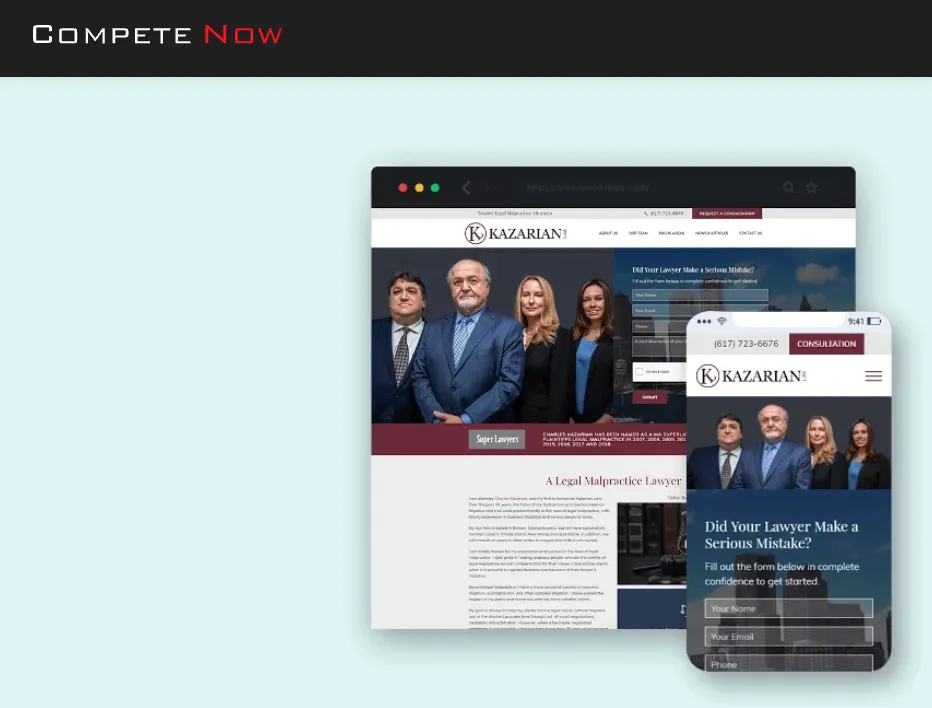
First impressions matter, particularly in the legal industry. Your website should immediately communicate professionalism and credibility while still reflecting what makes your firm distinct.
Effective law firm website design typically includes consistent branding, readable typography, professional photography, intentional use of color, and enough white space to make information easy to digest.
Custom design can also help a firm avoid looking interchangeable with competitors. Rather than building around a generic template, your website should reflect your firm’s personality, clients, practice areas, and approach.
Compete Now takes this approach with its law firm website design services, focusing on websites that balance credibility, usability, branding, and performance.
Simple, Intuitive Navigation
Someone visiting a law firm’s website may already be dealing with a stressful or unfamiliar situation. They shouldn’t have to figure out a complicated website at the same time.
Navigation should make important information easy to find, including:
- Practice areas
- Attorney profiles
- About the firm
- Results or case studies, when appropriate
- Resources or FAQs
- Contact information
For firms with several services or locations, website architecture becomes even more important. Visitors should be able to move naturally between related information without repeatedly returning to the homepage.
Detailed Practice Area Pages
A single page listing everything your firm does usually isn’t enough.
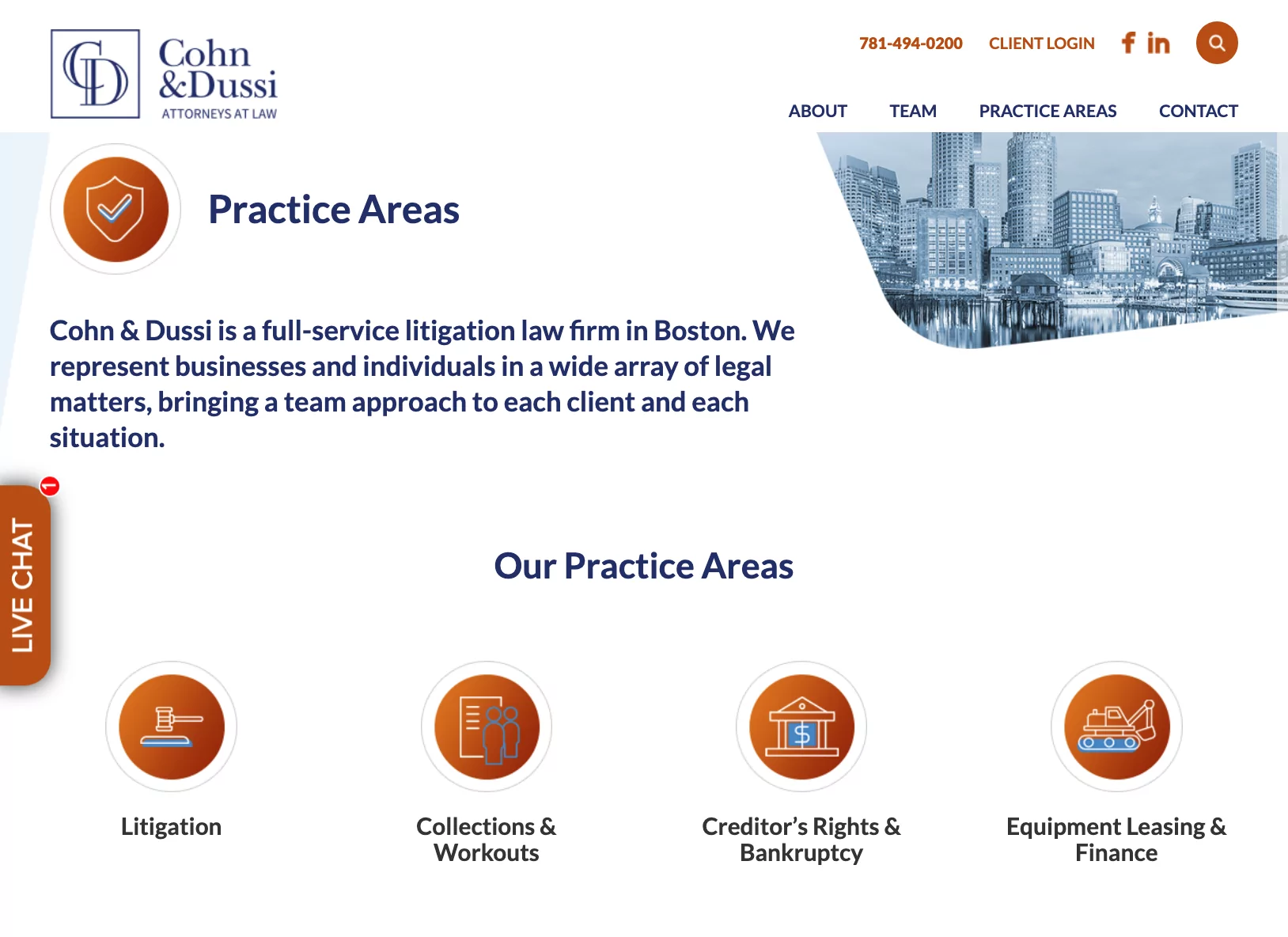
Individual practice area pages give prospective clients more information about specific services while also creating opportunities to improve the firm’s visibility in search results.
A strong practice area page should explain the legal service in straightforward language, identify common situations that may lead someone to seek an attorney, answer relevant questions, and provide a clear next step.
These pages are valuable for SEO, but they are ultimately written for people. Avoid filling them with legal terminology simply to demonstrate expertise. Your content should make a complicated subject easier to understand.
Strong Attorney Profiles
Prospective clients aren’t just hiring a law firm. They’re hiring people.
Attorney biography pages provide an opportunity to establish credibility while helping visitors become familiar with the attorneys they may work with. Compete Now has found attorney profiles to be an important component of legal website design because visitors may land directly on these pages while researching a particular attorney or legal service.
Consider including information such as:
- Professional experience
- Education
- Bar admissions
- Practice areas
- Professional affiliations
- Awards or recognition
- Community involvement
- Professional photography
The goal isn’t simply to list credentials. A strong bio helps a prospective client understand the attorney’s experience and approach.
Trust-Building Content
Legal services require a high degree of trust. Your website should provide prospective clients with credible information that helps them evaluate your firm.
Depending on the firm and applicable professional responsibility requirements, this could include client testimonials, representative matters, case results, awards, professional memberships, community involvement, and educational content.
Compete Now incorporated many of these elements into its redesign for Reservitz Law Group, including attorney profiles, testimonials, professional affiliations, notable case results, detailed practice area pages, and a clear explanation of the firm’s legal process.
Rather than simply telling visitors that your firm is experienced, give them useful information that helps demonstrate that experience.
Clear Calls to Action
Once someone decides they may want to speak with your firm, don’t make them search for the next step.
Calls to action should be visible throughout the website and use straightforward language such as:
- Schedule a Consultation
- Contact Our Firm
- Speak With an Attorney
- Request a Case Review
Contact forms should also be simple. Asking for too much information at the beginning can create unnecessary friction. Focus on collecting what your firm actually needs to begin the conversation.
Mobile-Friendly Design
Prospective clients may discover your firm from a phone, tablet, laptop, or desktop computer, so the website needs to work effectively across all of them.
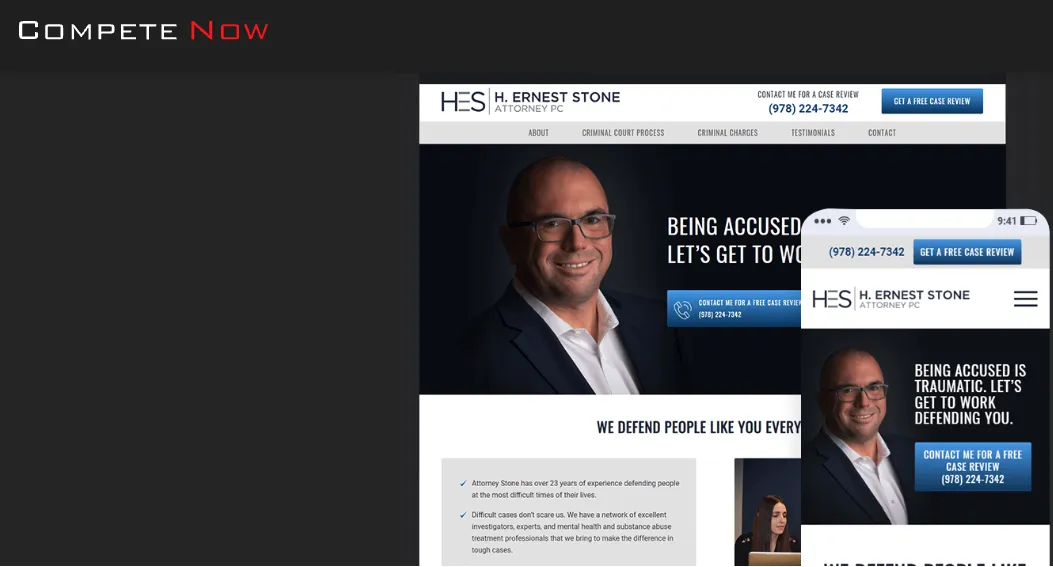
A responsive law firm website should provide easy-to-read content, simple menus, accessible contact information, appropriately sized buttons, and forms that are easy to complete on a smaller screen.
For example, Compete Now’s redesign of the Reservitz Law Group website keeps practice area information, case results, contact forms, and consultation buttons easily accessible across desktop and mobile devices.
Mobile design shouldn’t be treated as a smaller version of the desktop experience. It should be considered throughout the website design process.
A Strong SEO Foundation
Even an excellent website has limited value if prospective clients can’t find it.
Search engine optimization should be considered while the website is being planned and built, not added as an afterthought.
That includes developing a logical site structure, creating useful practice area content, optimizing page titles and headings, improving site speed, building internal links, and making sure search engines can properly crawl and understand the website.
For firms serving specific geographic markets, local SEO should also be part of the strategy. Relevant location content can help search engines and prospective clients understand where the firm practices and whom it serves.
Helpful Content That Answers Real Questions
An effective law firm website shouldn’t only talk about the firm. It should also help visitors understand the legal questions that brought them there.
Blogs, FAQs, guides, videos, and other educational resources can answer common questions while demonstrating the firm’s knowledge.
This content also expands the range of topics for which a website can potentially appear in traditional and AI-powered search experiences. Compete Now recommends developing substantive resources around the questions prospective clients are actually asking rather than publishing content simply for the sake of maintaining a blog.
A useful starting point is to ask your attorneys: What questions do prospective clients ask us over and over again?
Those questions can become some of your most valuable website content.
Accessibility, Speed, and Technical Performance
Some of the most important elements of an effective website aren’t immediately visible.
Pages should load quickly, links should work properly, forms should function consistently, and visitors should be able to navigate and understand the website regardless of the device or assistive technology they use.
Accessibility considerations can include readable typography, sufficient contrast, alternative text for meaningful images, keyboard-friendly navigation, properly structured headings, and accessible forms.
Compete Now builds websites with mobile usability, accessibility, search performance, and long-term growth in mind.
A Website That Can Grow With Your Firm
Your website shouldn’t become obsolete every time your practice evolves.
A scalable website makes it easier to add attorneys, practice areas, office locations, resources, case studies, FAQs, and other content over time. It should also be manageable enough that routine updates don’t become major development projects.
This is especially important for firms investing in long-term SEO and digital marketing. As your content strategy expands, your website needs an architecture capable of supporting that growth.
Bringing the Elements Together
There isn’t one website layout that works for every law firm. A personal injury practice, estate planning firm, business law practice, and litigation firm may have very different audiences and goals.
However, the fundamentals remain consistent.
An effective law firm website should clearly communicate what the firm does, establish trust, make information easy to find, perform well across devices, support search visibility, and provide straightforward opportunities for prospective clients to get in touch.
The strongest websites bring all of those elements together rather than treating design, development, content, SEO, and conversion strategy as separate projects.
Build a Stronger Law Firm Website With Compete Now
At Compete Now, we design custom websites for law firms with these priorities in mind. Our team combines website design and development with SEO and digital marketing expertise to create websites that are professional, easy to navigate, built for search visibility, and designed around the needs of prospective clients.
Whether your firm is working with an outdated website, preparing for a redesign, or building a new online presence from the ground up, the goal should be bigger than simply launching a better-looking website.
It should be to create a digital presence that supports your firm’s credibility, visibility, and long-term growth.
Learn more about Compete Now’s law firm website design services or contact our team to discuss your firm’s website and digital marketing goals.
FAQs About Effective Law Firm Websites
What should every law firm website include?
At minimum, a law firm website should include clear practice area information, attorney profiles, contact information, calls to action, an About section, and helpful information for prospective clients. Depending on the firm, testimonials, case results, FAQs, resources, and location-specific content can further strengthen the website.
How important is SEO for a law firm website?
SEO helps search engines understand a firm’s services, expertise, and geographic relevance. Building a website with SEO in mind from the beginning can create a stronger foundation for increasing organic visibility and reaching prospective clients who are actively researching legal services.
How often should a law firm website be updated?
There is no universal schedule, but firms should regularly review attorney information, practice areas, contact details, legal resources, technical performance, and other time-sensitive content. Publishing useful new resources can also keep the website relevant as client questions and search behavior change.
What makes a law firm website trustworthy?
Professional design, detailed attorney information, transparent practice area content, professional photography, reviews or testimonials where permitted, relevant credentials, and useful educational resources can all help establish credibility. Consistency and accuracy throughout the website are equally important.
Should a law firm website have a blog?
A blog can be valuable when the firm has useful information to share. Well-developed articles can answer prospective clients’ questions, demonstrate subject-matter knowledge, strengthen internal linking, and expand the topics for which the website may appear in search.
When should a law firm redesign its website?
A redesign may be worth considering when the site looks outdated, performs poorly on mobile devices, is difficult to update, loads slowly, no longer reflects the firm’s services or brand, or lacks the structure needed to support SEO and lead generation.


